
Introduction
Modern digital storytelling is no longer about presenting a single idea in a straight line. Audiences today consume content in layers, switching between perspectives, formats, and emotional angles depending on what resonates with them. This shift has given rise to a more dynamic and engaging method of communication where a single theme is explored through multiple narratives rather than a single explanation. This approach helps creators, brands, and writers build depth, emotional connection, and authority around a subject.
At the heart of this evolution lies the concept often described as a multi-narrative framework. It encourages creators to break down one central idea into several distinct stories, each offering a unique lens. Instead of forcing one interpretation, the method embraces complexity and diversity of thought. This makes content more relatable and more powerful, especially in competitive digital spaces where attention is limited and expectations are high.
This article explores the complete structure, benefits, and applications of this storytelling approach, often referred to as your topics | multiple stories, and explains how it can transform content creation in marketing, fiction writing, and AI-driven ideation.
Understanding your topics | multiple stories approach to storytelling
The idea behind your topics | multiple stories is rooted in simplicity: one core topic can produce many meaningful narratives. Rather than limiting communication to a single voice or angle, this method encourages creators to expand the subject into different perspectives that reflect real-world complexity. Each story stands independently, yet contributes to a broader understanding of the central theme.
This approach is especially effective because human beings naturally understand the world through stories rather than isolated facts. When a topic is presented through multiple narratives, it becomes easier to absorb, remember, and emotionally connect with. Instead of reading a single explanation, the audience experiences the topic through different characters, situations, or analytical viewpoints, which increases both engagement and comprehension.
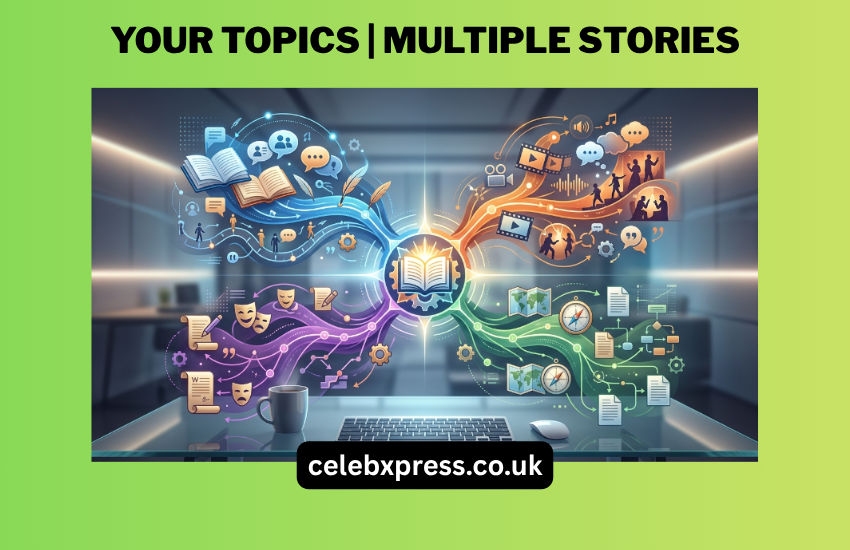
In practical use, this framework works like a storytelling ecosystem. A single idea becomes the “pillar,” while each narrative becomes a supporting structure. Together, they create a complete content experience that feels rich and multidimensional. This is why modern content creators increasingly rely on this method to stand out in saturated digital environments.
Core principles behind multi-narrative storytelling
At the foundation of this approach lies the principle of perspective diversity. A single topic can be understood differently depending on who is experiencing it, and multi-narrative storytelling embraces that variation instead of ignoring it. By presenting contrasting viewpoints, creators can reveal hidden dimensions of an idea that would otherwise remain unexplored.
Another essential principle is thematic unity. Even though the stories differ in tone, format, or perspective, they must all connect back to a single central idea. Without this anchor, the content risks becoming fragmented. The strength of this method comes from balancing variety with cohesion, ensuring that each narrative contributes to a unified message.
Finally, emotional layering plays a crucial role. Different stories evoke different emotional responses, and when combined, they create a richer emotional experience for the audience. One narrative might focus on struggle, another on success, and another on reflection. Together, they form a complete emotional journey that single-story formats often fail to deliver.
your topics | multiple stories in content marketing and SEO
In digital marketing, your topics | multiple stories has become a powerful strategy for building authority and improving search visibility. Search engines increasingly reward content that demonstrates depth, topical coverage, and user relevance. By creating multiple narratives around a single pillar topic, brands can naturally target a wider range of search intents without repeating the same content.
From an SEO perspective, this approach allows content creators to cover long-tail keywords, user questions, and semantic variations in a more organic way. Instead of forcing all information into one article, each narrative can focus on a specific subtopic, improving clarity and user experience. This also increases the chances of ranking for multiple search queries under the same thematic cluster.
For brands, this method builds trust and expertise. When users encounter different stories from the same brand that all connect to a central idea, it reinforces authority. It shows that the brand understands the topic from multiple angles, whether technical, emotional, or practical. Over time, this creates stronger engagement and higher retention rates.
Creative writing applications and narrative depth
In creative writing, the multi-narrative model allows authors to build immersive and emotionally rich worlds. Instead of telling a story from a single perspective, writers can explore the same event through multiple characters or timelines. This technique adds depth and realism, as readers gain access to different interpretations of the same reality.
One of the most powerful uses of this method is character-driven storytelling. When different characters experience the same event in contrasting ways, it highlights personality differences and internal conflict. This creates a more dynamic narrative structure that keeps readers engaged and curious about how each perspective will unfold.
Another application is timeline variation, where a story is told across different periods of a character’s life. This allows writers to explore how experiences shape identity over time. By connecting past and present narratives, the story gains emotional weight and thematic complexity, making it more memorable and impactful.
your topics | multiple stories in AI-driven ideation
Artificial intelligence has significantly amplified the potential of multi-narrative content creation. With AI tools, creators can instantly generate multiple interpretations of a single topic, each with a different tone, structure, or emotional direction. This makes it easier to explore ideas that would traditionally require extensive brainstorming and manual drafting.
One of the key advantages of AI-assisted storytelling is speed. Instead of spending hours developing different story angles, creators can input a single concept and receive multiple narrative outputs in seconds. These outputs can then be refined, combined, or repurposed for different audiences or platforms.
This approach also encourages experimentation. AI can generate versions of the same story in formats such as analytical essays, fictional narratives, or conversational explanations. This flexibility allows creators to test which version resonates most with their audience, making content strategy more data-informed and adaptive.
How to structure a multi-story content strategy
A successful implementation of this approach begins with selecting a strong central theme. The topic should be broad enough to allow multiple interpretations but focused enough to maintain coherence. This central idea becomes the foundation upon which all narratives are built.
Once the topic is defined, the next step is identifying different angles or perspectives. These could be based on audience type, emotional tone, professional viewpoint, or time-based variation. Each angle should feel distinct enough to stand on its own while still contributing to the larger theme.
Finally, consistency must be maintained across all narratives. Even though each story is unique, they should share a recognizable thread that ties them together. This ensures that the audience understands how each piece fits into the overall structure, creating a seamless content experience.
Common mistakes and how to avoid them
One of the most common mistakes in multi-narrative content creation is overcomplication. When too many perspectives are introduced without clear structure, the message becomes confusing. It is important to maintain balance and avoid unnecessary fragmentation that weakens the central theme.
Another issue is lack of cohesion. If individual stories do not clearly connect back to the main idea, the strategy loses effectiveness. Every narrative must serve a purpose within the larger framework, whether it is to explain, contrast, or deepen understanding of the topic.
Creators also sometimes repeat the same idea across different stories without meaningful variation. This reduces engagement and makes the content feel redundant. Each narrative should offer a fresh insight or emotional perspective to keep the audience interested and invested.
Measuring impact and engagement performance
Evaluating the success of a multi-narrative strategy requires looking beyond simple metrics like page views. Engagement depth, such as time spent on page and interaction rates, often provides a better indication of effectiveness. When audiences move between multiple narratives, they tend to spend more time exploring the content ecosystem.
Another important metric is content retention. If users return to explore different narratives under the same theme, it indicates strong thematic authority. This suggests that the multi-story approach is successfully building interest and trust over time.
Search performance is also a key indicator. When multiple pieces of content rank for related queries under the same topic, it demonstrates that the strategy is effectively covering a semantic cluster. This strengthens overall visibility and long-term SEO performance.
Conclusion
The modern content landscape demands more than linear storytelling. Audiences expect depth, variety, and emotional resonance, all of which are naturally delivered through a multi-narrative framework. By exploring a single topic through different perspectives, creators can build richer, more engaging, and more authoritative content experiences.
The approach known as your topics | multiple stories is not just a writing technique but a strategic mindset. It encourages flexibility, creativity, and structure at the same time. Whether used in marketing, fiction, or AI-assisted creation, it consistently enhances clarity and impact.
As digital ecosystems continue to evolve, the ability to tell one story in many ways will remain a valuable skill. It transforms simple ideas into interconnected experiences, ensuring that content is not only consumed but remembered.
