
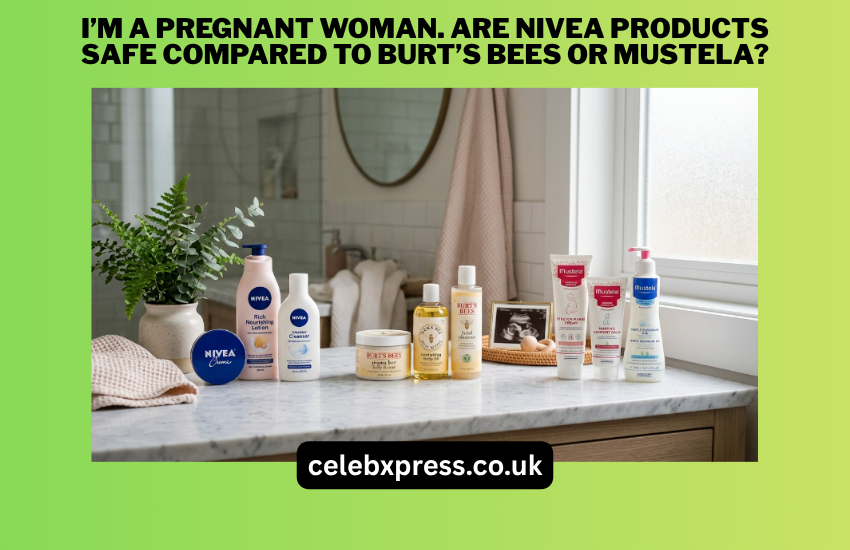
Pregnancy changes more than just the body—it transforms how the skin reacts to everyday products. Hormonal shifts can make skin more sensitive, reactive, and unpredictable, which is why choosing skincare becomes more important than ever. Many expecting mothers start questioning whether their trusted daily moisturizers are still safe or if they should switch to pregnancy-focused skincare lines.
Among the most commonly compared brands are Nivea, Burt’s Bees, and Mustela. Each brand has a very different philosophy, formulation style, and safety positioning, which makes the comparison more nuanced than simply labeling one as “safe” or “unsafe.”
This guide breaks down ingredient safety, product types, and pregnancy suitability in a clear and practical way so you can confidently decide what belongs in your skincare routine during this sensitive stage of life.
Understanding skincare safety during pregnancy
Pregnancy skincare safety is not determined by brand reputation alone but by ingredient composition. The same brand can offer both very gentle products and others that are less suitable depending on their formulation. This is why reading labels becomes more important than ever, even with well-known names.
During pregnancy, the skin barrier may become more reactive, meaning products that were once harmless can suddenly cause irritation or sensitivity. Hormonal fluctuations also increase the likelihood of pigmentation issues, dryness, and uneven texture, which leads many women to use more active skincare without realizing potential risks.
The safest approach is not brand loyalty but ingredient awareness. Understanding which compounds to avoid and which ones to prioritize creates a foundation for safer skincare decisions regardless of whether the product comes from a mass-market or dermatology-focused brand.
i’m a pregnant woman. are nivea products safe compared to burt’s bees or mustela?
The question of whether Nivea is safe compared to Burt’s Bees or Mustela does not have a single universal answer. Safety depends on specific product formulations rather than the brand name itself.
In general, Nivea offers a wide mass-market range that includes everything from basic moisturizers to advanced anti-aging creams. Burt’s Bees focuses more on natural-origin ingredients, while Mustela is specifically designed for maternity and baby care with stricter dermatological testing. These differences influence how each brand is typically perceived during pregnancy.
However, perception does not always equal safety. Some Nivea products are extremely simple and gentle, while certain Burt’s Bees products may include potent botanical extracts, and some Mustela non-maternity products can still contain fragrance or standard cosmetic additives. This is why ingredient-level evaluation is essential when comparing them.
Nivea skincare formulation and pregnancy considerations
Nivea is known for its deeply moisturizing creams and accessible skincare solutions. Its formulations often combine humectants, emollients, and synthetic stabilizers designed to maintain long shelf life and consistent texture across global markets. This makes the brand reliable but also more chemically diverse.
In pregnancy, the key concern with Nivea products is not the entire brand but specific categories. Anti-aging creams and targeted treatments may contain retinoids or strong actives that are generally avoided during pregnancy. Additionally, some products rely on synthetic fragrance blends, which can trigger sensitivity in hormonally reactive skin.
At the same time, many classic Nivea moisturizers are considered relatively simple barrier creams. These can be useful for dryness and stretching skin, especially when the formula is minimal and free from active anti-aging compounds. The key is selecting the right product line rather than avoiding the brand entirely.
Burt’s Bees pregnancy-friendly formulation approach
Burt’s Bees builds its identity around plant-based ingredients such as beeswax, botanical oils, and fruit extracts. This natural positioning makes it appealing to expecting mothers who prefer simpler ingredient lists with fewer synthetic compounds.
One of the strengths of Burt’s Bees is its focus on moisture-rich formulations designed for daily comfort. Products like belly creams and lip balms are often formulated without parabens or phthalates, which are commonly avoided during pregnancy. This gives the brand a strong reputation in the maternity skincare space.
However, natural does not always mean risk-free. Some formulations include essential oils or complex plant extracts that can cause sensitivity or allergic reactions during pregnancy. Since hormonal changes can increase skin reactivity, even natural fragrances may feel overpowering or irritating in certain cases.
Mustela dermatological focus and maternity specialization
Mustela is widely recognized for its strong focus on dermatological testing and maternity-specific product development. Unlike general skincare brands, it designs several products specifically for pregnancy-related concerns such as stretch marks, dryness, and skin elasticity.
Its formulations are typically more controlled, often emphasizing hypoallergenic properties and simplified ingredient structures. Many products are tested under dermatological and gynecological supervision, which makes them particularly attractive for those who prefer minimal guesswork in skincare selection.
Still, it is important to remember that not every Mustela product is exclusively a maternity formula. Some general skincare items may include fragrance or standard cosmetic additives. The advantage lies in choosing from its dedicated maternity range, which is specifically designed for pregnancy safety considerations.
Key ingredient risks during pregnancy skincare use
The most important factor in pregnancy skincare is ingredient awareness. Certain compounds are widely recommended to avoid because they may pose potential risks or lack sufficient safety data during pregnancy. These include retinoids such as retinol and its derivatives, which are commonly found in anti-aging products.
Another ingredient to watch for is hydroquinone, often used in skin lightening treatments. Because of its higher absorption rate, it is generally advised to avoid it during pregnancy. Chemical sunscreen filters like oxybenzone and octisalate are also often replaced with mineral-based alternatives for a more cautious approach.
Fragrance is another major consideration. Even when not harmful in small amounts, synthetic fragrance mixtures can contain undisclosed chemicals that may trigger sensitivity or hormonal concerns. During pregnancy, fragrance-free or naturally derived scent options are often preferred.
Comparison of Nivea, Burt’s Bees, and Mustela
Here is a clear breakdown of how the three brands compare in terms of pregnancy skincare suitability, formulation style, and key considerations:
| Category | Nivea | Burt’s Bees | Mustela |
|---|---|---|---|
| Formulation style | Mass-market synthetic + skincare blends | Natural plant-based ingredients | Dermatology-tested maternity-focused |
| Pregnancy positioning | General use, not pregnancy-specific | Semi-natural, some maternity products | Strong maternity specialization |
| Fragrance use | Common in many products | Natural scents, essential oils | Reduced in maternity line |
| Key strength | Affordable hydration | Natural ingredient appeal | Clinical pregnancy focus |
| Key concern | Retinoids, fragrance in some lines | Essential oil sensitivity | Some non-maternity products include fragrance |
| Best use case | Basic moisturization | Natural daily care | Pregnancy-specific skincare routines |
This comparison shows that no brand is completely superior in every category. Instead, each one serves a different purpose depending on how strictly you want to control ingredients and how your skin responds during pregnancy.
i’m a pregnant woman. are nivea products safe compared to burt’s bees or mustela? (ingredient-focused breakdown)
When evaluating Nivea against Burt’s Bees and Mustela, the most practical approach is focusing on ingredient transparency rather than branding assumptions. Each brand includes both safer and less suitable formulations depending on product type.
For example, a basic moisturizer from any of these brands may be perfectly suitable for pregnancy, while a targeted anti-aging cream or brightening product may introduce ingredients that are better avoided. This means two products from the same brand can have very different safety profiles.
The key takeaway is that pregnancy-safe skincare is not about choosing one brand over another but about selecting the right product within each brand. Reading labels, understanding actives, and prioritizing simplicity will always outperform brand-based decision-making.
How to choose safe skincare products during pregnancy
Choosing skincare during pregnancy becomes easier when you focus on simplicity. Products with shorter ingredient lists and fewer active treatments are generally easier for the body to tolerate. Moisturizers, gentle cleansers, and basic sunscreens often form the foundation of a safe routine.
It is also helpful to prioritize barrier-supporting ingredients such as glycerin, shea butter, and ceramides. These help maintain hydration and skin integrity without introducing unnecessary complexity. Many pregnancy-safe routines are built around nourishment rather than correction.
Another important habit is patch testing new products before full application. Because pregnancy can change skin sensitivity quickly, testing a small area helps avoid unexpected reactions and ensures better comfort and safety.
Dermatologist-style pregnancy skincare routine guidance
A simplified pregnancy skincare routine typically focuses on hydration, protection, and gentle cleansing. Morning routines often include a mild cleanser followed by a moisturizer that supports the skin barrier. Sunscreen is also an essential step, preferably in a mineral-based form.
Evening routines tend to focus on recovery and nourishment. A gentle cleanser followed by a richer moisturizer helps maintain hydration levels overnight. This is particularly helpful as hormonal changes can increase dryness or sensitivity in many expecting mothers.
The overall goal is not to aggressively treat skin concerns but to maintain balance. Pregnancy is a temporary phase, and skincare during this time should prioritize comfort, safety, and consistency rather than intensive correction.
i’m a pregnant woman. are nivea products safe compared to burt’s bees or mustela? (final perspective)
Ultimately, comparing Nivea, Burt’s Bees, and Mustela comes down to how carefully you evaluate each product rather than choosing a single “best” brand. Each one offers usable options for pregnancy, but none are universally perfect or universally unsafe.
Nivea provides accessible and effective hydration but requires more attention to active ingredients in certain product lines. Burt’s Bees offers a more natural approach but still requires awareness of botanical sensitivity. Mustela provides the most pregnancy-focused design philosophy but still benefits from label reading for non-maternity products.
The safest path is informed selection. When you understand ingredients and match them to your skin’s needs, you can confidently use products from any of these brands while maintaining a safe and comfortable pregnancy skincare routine.
Conclusion
Pregnancy skincare is less about switching to a completely new brand and more about becoming a more conscious consumer. Whether you choose Nivea, Burt’s Bees, or Mustela, the real safety factor lies in understanding ingredients and selecting products aligned with pregnancy needs.
A balanced routine built on gentle cleansing, deep hydration, and careful sun protection will serve most expecting mothers well. With thoughtful choices and label awareness, skincare during pregnancy can remain both safe and enjoyable without unnecessary stress or confusion.
