
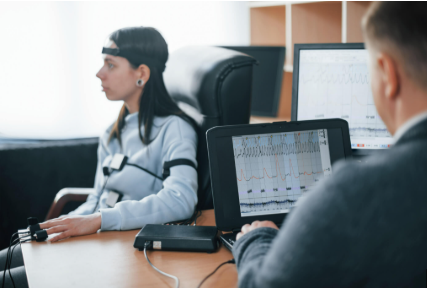
Imagine this: you’re sitting in a small, stuffy room, your palms slightly sweaty. Across from you, someone is adjusting wires and clips, telling you to stay calm. You know the questions are coming, and you can feel your heart start to race. Welcome to the world of the polygraph test.
For many people, just the thought of a polygraph—commonly called a lie detector—is enough to make them nervous. But here’s the thing: most of us have a pretty skewed idea of what they actually do. Movies make them seem infallible, like a machine that can peer straight into your soul. Reality? It’s a little more complicated.
How a Polygraph Test Works
At its core, a polygraph measures your body’s physical reactions. Heart rate, blood pressure, breathing patterns, even tiny changes in skin conductivity. The idea is simple: when you lie, your body reacts. But here’s where it gets tricky. Those reactions aren’t proof of lying—they’re proof of stress. And stress doesn’t just show up when you’re fibbing.
Imagine you’re at a job interview, being asked if you’ve ever stretched the truth on your résumé. You haven’t, but the question feels loaded. Your stomach knots. Your heart skips. A polygraph test could flag that. So, in a way, it’s not lying detection—it’s stress detection with a twist.
Polygraphs are usually done in three phases. First, there’s a pre-test interview where the examiner explains the procedure, builds rapport, and asks background questions. Then comes the actual test, where you answer a series of questions while hooked up to sensors. Finally, the examiner interprets the results, often using charts that look like they belong in a science lab. And yes, reading those charts is part science, part art.
The Accuracy Debate
Here’s where things get controversial. Polygraph enthusiasts claim 90% accuracy. Skeptics roll their eyes and say it’s closer to chance. The truth? It depends on a lot of factors: the examiner’s skill, the type of questions, and even the person being tested. Some people are naturally calm under pressure, while others sweat at the thought of a harmless question.
I remember a friend who went through a polygraph for a security clearance. She studied everything she could, practiced her breathing, and even told herself calming mantras. Yet, during the test, her hands shook, her pulse spiked, and the examiner raised an eyebrow at the charts. In the end, she passed—but only barely. That’s a perfect example of how subjective it can get.
Real-Life Uses You Might Not Expect
Most people think polygraphs are just for criminal investigations. Not true. They’re used in a bunch of scenarios you might not expect. Companies sometimes use them for sensitive jobs, like security positions or government roles. Law enforcement might use them during internal investigations. And yes, sometimes they show up in divorce disputes or theft cases, though that’s far less common.
Now, let’s be honest: a polygraph isn’t a magic truth serum. It’s more like a conversation with very sensitive body monitors. People can—and do—fail or pass for all sorts of reasons unrelated to honesty. Nervousness, caffeine, lack of sleep, even certain medications can skew results. That’s why most courts don’t accept polygraph results as hard evidence. It’s a tool, not a verdict.
The Human Factor
If there’s one thing movies rarely show, it’s how much the human examiner matters. A skilled examiner can read micro-expressions, notice shifts in tone, and even adjust questions on the fly. A bad examiner? You might as well be hooked up to a fancy stress ball.
I once heard about an investigator who could detect deception just by watching subtle cues before the sensors even came into play. Meanwhile, others might follow a rigid script, missing the whole point of interpreting human behavior. That’s why a polygraph test is as much about psychology as it is about technology.
Coping With the Nerves
If you ever find yourself facing a polygraph, nerves are your biggest challenge. Most people overthink every word, fearing that one wrong answer will set off the machine. The best approach? Don’t overthink. Focus on staying calm, breathe steadily, and answer clearly. Small tricks like controlled breathing or visualizing a relaxing scene can help more than you’d think.
And remember, it’s okay to admit you’re nervous. Examiners expect it. In fact, acknowledging your anxiety can sometimes make the results easier to interpret because they’re looking for deviations from your baseline, not perfection.
Can You “Cheat” a Polygraph?
Here’s a question that comes up a lot: can you trick it? Technically, some people try. Tensing muscles, controlling breathing, even using countermeasures like thinking of stressful events during control questions. But the truth is, it’s risky, and often it just makes you look guilty. Plus, modern polygraph examiners are trained to notice these tactics.
Think of it like trying to fake a smile in a job interview. A trained eye sees the difference between a natural reaction and a forced one. Same principle here. The polygraph itself isn’t perfect, but the human interpreting it usually notices patterns that machines alone can’t.
The Takeaway
Polygraphs are fascinating because they sit at the intersection of science and human behavior. They’re not lie detectors in the absolute sense. They’re stress detectors. They measure physical reactions and give trained examiners data to interpret, but human nuance always comes into play.
If you ever have to take one, approach it with calm and honesty. That’s your best bet. And if you’re just curious, don’t take the Hollywood version too seriously. It’s not magic. It’s a complicated dance between the body and the mind, and sometimes the mind wins, sometimes the machine does.
In the end, a polygraph test is less about catching liars and more about understanding human reactions under pressure. It’s a reminder that honesty isn’t always black and white—and neither are the charts on a lie detector machine.
