
Introduction
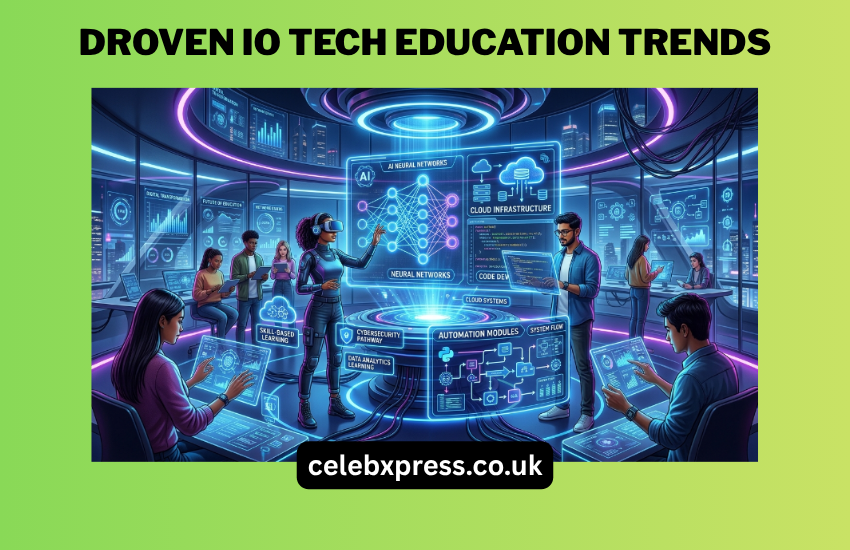
Education is undergoing a major transformation as digital technologies reshape how people learn, practice, and apply skills. Traditional academic systems, which often relied heavily on theory and long learning cycles, are being replaced by more dynamic, flexible, and industry-driven models. One of the most notable examples of this shift is droven io tech education trends, which emphasize practical learning, digital fluency, and real-time skill development aligned with modern industry needs.
Instead of focusing only on degrees or theoretical understanding, this approach prioritizes hands-on experience and direct engagement with current technologies. Learners are encouraged to work with tools and environments that reflect real-world job conditions, making the transition from education to employment smoother and more effective. This change is especially important in a world where technology evolves rapidly and employers expect immediate productivity from new professionals.
As industries continue to expand their reliance on artificial intelligence, cloud systems, and automation, education must adapt to stay relevant. This evolving model ensures that learners are not left behind but are instead equipped with up-to-date knowledge and practical abilities that match the pace of technological progress.
The Core Philosophy Behind Modern Tech Education Systems
Modern tech education systems are built around the idea that learning should be practical, flexible, and continuously updated. Instead of memorizing outdated concepts, learners focus on solving real problems using current tools and platforms. This makes education more relevant and directly applicable to today’s digital workforce.
Another important aspect of this philosophy is adaptability. Technology changes quickly, and educational content must evolve just as fast. Continuous curriculum updates ensure that learners are always working with the latest tools and methodologies, reducing the gap between academic learning and industry expectations. This also encourages lifelong learning, where individuals constantly upgrade their skills throughout their careers.
In addition, this approach removes many traditional barriers in education. Students are no longer restricted by fixed programs or rigid timelines. Instead, they can learn at their own pace, focusing more on skill mastery rather than time spent in classrooms. This shift helps create more confident and capable professionals who are ready for real-world challenges.
Droven IO Tech Education Trends and Industry Alignment
One of the most important strengths of droven io tech education trends is its strong alignment with industry demands. Modern businesses require employees who can immediately contribute, especially in fields like software development, data science, cybersecurity, and cloud engineering. This model ensures learners gain exactly those skills that companies are actively hiring for.
By focusing on real-world applications, learners are exposed to practical scenarios such as debugging code, building cloud-based systems, and managing automated workflows. This hands-on experience allows them to develop problem-solving abilities that go beyond theoretical understanding. As a result, graduates become more job-ready and competitive in the global market.
This alignment also benefits employers, who no longer need to spend excessive time training new hires from scratch. Instead, they gain access to talent that is already familiar with industry tools and workflows. This creates a more efficient hiring ecosystem where education and employment work together seamlessly.
Artificial Intelligence as a Learning Engine
Artificial intelligence plays a central role in reshaping modern education systems by personalizing learning experiences. Instead of a one-size-fits-all approach, AI adapts content based on each learner’s strengths, weaknesses, and progress. This ensures a more efficient and engaging learning journey.
Through intelligent systems, students receive recommendations for what to study next, which skills to improve, and which projects to attempt. This adaptive learning style helps reduce confusion and keeps learners focused on areas that matter most for their growth. It also allows faster progress compared to traditional methods.
AI also enhances feedback mechanisms by providing instant evaluation of tasks and assignments. This real-time feedback helps learners correct mistakes quickly and build stronger foundations in technical subjects. Over time, this leads to deeper understanding and higher skill retention.
Cloud Computing and the Rise of Collaborative Learning Environments
Cloud computing has become a cornerstone of modern education systems by enabling seamless access to learning environments from anywhere in the world. Students no longer need powerful local machines or physical labs to practice technical skills. Instead, they can access cloud-based platforms that simulate real-world development environments.
This accessibility promotes collaboration among learners across different regions. Students can work together on projects, share resources, and build applications in shared digital spaces. This mirrors modern workplace environments, where remote collaboration is increasingly common.
Additionally, cloud-based systems allow educational content to be updated instantly. This ensures learners always work with the latest tools and frameworks, keeping their skills relevant in fast-changing industries like software engineering and data science.
Automation Tools and Their Role in Skill Development
Automation has become a critical component of modern tech education, helping learners understand how to streamline repetitive tasks and improve efficiency. By learning automation tools, students can focus more on problem-solving and innovation rather than manual processes.
These tools are widely used in industries such as IT operations, software testing, and data processing. Exposure to automation early in the learning process prepares students for real-world environments where efficiency is highly valued. It also encourages logical thinking and system design skills.
Moreover, automation education helps learners understand how modern digital systems function at scale. This knowledge is essential for building scalable applications and managing complex technological infrastructures in professional settings.
Skill-Based Learning as the New Educational Standard
Skill-based learning is becoming the dominant approach in modern education because it focuses on what learners can actually do rather than what they know in theory. This model prioritizes practical tasks, real projects, and measurable outcomes over traditional exams and grades.
In this system, learners progress by demonstrating mastery of specific skills. This creates a more transparent and motivating learning environment where success is clearly defined. It also ensures that students are better prepared for real job roles.
As industries continue to evolve, skill-based learning provides a more reliable way to keep education aligned with market demands. It ensures that learners are always developing capabilities that are directly relevant to current and future job opportunities.
Micro-Learning and the Future of Flexible Education
Micro-learning breaks down complex technical concepts into smaller, more manageable lessons. This makes it easier for learners to absorb information without feeling overwhelmed. It is especially useful in tech education, where topics can often be highly complex and detailed.
Short learning modules allow students to focus on one concept at a time, improving retention and understanding. This method also fits better into modern lifestyles, where learners may only have short periods of time available for study.
Over time, micro-learning creates a continuous learning habit, encouraging individuals to keep upgrading their skills regularly. This approach ensures steady progress without the pressure of long, traditional study sessions.
Continuous Curriculum Updates for a Fast-Changing Tech World
Technology evolves rapidly, and educational systems must evolve alongside it to remain relevant. Continuous curriculum updates ensure that learners are always studying the latest tools, programming languages, and industry practices.
This dynamic approach prevents outdated knowledge from slowing down career growth. Instead, learners are always aligned with current industry standards, making them more competitive in the job market.
It also fosters a culture of adaptability, where learners understand that education is not a one-time process but a continuous journey. This mindset is essential for long-term success in technology-driven industries.
Workforce Readiness and Career Transformation
One of the ultimate goals of modern tech education is workforce readiness. This means preparing learners not just academically but professionally, ensuring they can immediately contribute in real job environments.
Through practical training, real-world simulations, and project-based learning, students gain the confidence and skills needed to handle workplace challenges effectively. This reduces the gap between education and employment significantly.
As a result, learners transition more smoothly into careers in software development, cloud engineering, data science, and other tech-driven fields. They become valuable assets to organizations from day one.
Conclusion
The evolution of digital education is reshaping how individuals learn, grow, and enter the workforce. Modern frameworks like droven io tech education trends are at the forefront of this transformation, focusing on real-world skills, adaptability, and continuous learning. By integrating technologies such as artificial intelligence, cloud computing, and automation, this approach ensures that education remains relevant in a rapidly changing digital world.
As the demand for skilled professionals continues to rise, this model provides a clear pathway for learners to build meaningful careers. It bridges the gap between theory and practice, creating a more efficient, accessible, and future-ready education system that benefits both learners and industries alike.
